The inverted nipple treatment refers to all surgical and medical techniques used to correct one or more nipples that do not point outward but are partially or completely retracted into the areola. The surgeon intervenes to release the retractile fibers or treat the milk ducts responsible for the inversion, thus restoring the nipple’s natural shape and projection. This procedure is often quick, performed under local or general anesthesia depending on severity, and can concern both women and men.
The cost of inverted nipple treatment varies according to the technique used, the surgeon’s level of expertise, and the country where the procedure is performed. Here is a comparative table of average prices in 2025 across different countries for the main methods (traditional surgery, low-scar technique, minimally invasive method):
| Country | Traditional Surgery (in €) | Low-scar Technique (in €) | Minimally Invasive Technique (in €) |
|---|---|---|---|
| France | 1200 – 1800 | 1500 – 2200 | 1700 – 2400 |
| United Kingdom | 1300 – 1900 | 1600 – 2300 | 1800 – 2500 |
| Germany | 1100 – 1700 | 1400 – 2000 | 1600 – 2200 |
| Netherlands | 1200 – 1800 | 1500 – 2100 | 1700 – 2300 |
| Italy | 1000 – 1600 | 1300 – 1900 | 1500 – 2100 |
| Tunisia | 700 – 1100 | 900 – 1300 | 1100 – 1500 |
| Turkey | 800 – 1200 | 1000 – 1500 | 1200 – 1700 |
| Morocco | 700 – 1000 | 900 – 1200 | 1100 – 1400 |
| Czech Republic | 900 – 1400 | 1100 – 1600 | 1300 – 1700 |
| Lithuania | 800 – 1200 | 1000 – 1400 | 1200 – 1600 |
| Thailand | 1100 – 1500 | 1300 – 1700 | 1500 – 1900 |
| Poland | 900 – 1300 | 1100 – 1500 | 1300 – 1700 |
| Belgium | 1300 – 1800 | 1500 – 2100 | 1700 – 2300 |
| Albania | 700 – 1100 | 900 – 1300 | 1000 – 1400 |
Average prices updated for 2025; they may vary depending on practitioner experience, type of anesthesia, and additional services.
The treatment of inverted nipples is generally not reimbursed by Health Insurance or social security when performed purely for cosmetic reasons. However, partial and exceptional coverage may be available in cases of severe congenital malformation or reconstruction following breast cancer, subject to submission of a detailed medical file.
The aim of inverted nipple treatment is to restore a natural nipple appearance, improve self-confidence, and, in some cases, to allow for breastfeeding. Several other breast surgeries can be associated or considered, depending on expectations:
The treatment of inverted nipples has benefited from multiple technological advances in recent years:







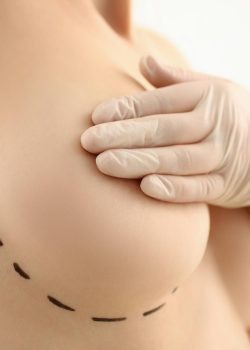


The surgical treatment of inverted nipples is performed outpatient, under local or general anesthesia depending on the chosen technique and degree of inversion. After disinfection and protection of the area, the surgeon usually makes a micro-incision at the base of the nipple to access the fibers that pull it inward.
In most cases, these retractile fibers are subtly cut or weakened. Sometimes, the surgeon separates or releases the galactophorous (milk) ducts to allow the nipple to project naturally while preserving breastfeeding capability as much as possible. Careful handling preserves the nipple’s harmonious shape and limits the appearance of visible scars.
Depending on the method, resorbable sutures are then placed to maintain the nipple’s new position. The wound is closed with care to create a discreet scar, often hidden within the natural crease of the areola. A light dressing is applied to protect the operated area, and the patient usually leaves the same day.
The correction of an inverted nipple is a short procedure, lasting on average between 30 and 60 minutes per nipple, depending on the complexity of the inversion and the type of technique used.
In case of bilateral correction or if the surgery is combined with other breast procedures, the duration may be slightly longer. Nevertheless, the operation is still considered a quick surgery.
Pain after inverted nipple surgery is generally very mild. Most patients describe slight discomfort or sensitivity in the nipple area for a few days.
Severe pain is rare, and simple analgesic treatment is usually sufficient for comfort. Thanks to modern minimally invasive techniques, the procedure is increasingly well tolerated, allowing a rapid return to daily activities. If persistent or unusual pain occurs, it is recommended to consult the surgeon promptly.
After an operation to correct an inverted nipple, post-operative follow-up plays a crucial role. It is during this phase that definitive results appear and proper healing is monitored. It is therefore essential to follow the surgeon’s instructions and attend check-up appointments to optimize aesthetic results and minimize the risk of complications.
Initial improvement is generally visible immediately at the end of the operation: the nipple regains external projection. However, patience is needed to fully assess the final result.
Swelling and slight redness are typical during the first week. The final shape usually takes form between 1 and 3 months after the operation, once healing is complete and the tissues have stabilized. A 6-month follow-up appointment will evaluate the long-term permanence of the result.
In most cases, the result of inverted nipple correction is stable for several years, even permanent. However, certain severe or recurrent cases may have a risk of recurrence, especially if the retractile fibers could not be entirely released during surgery.
Proper maintenance (avoiding trauma, monitoring long-term evolution), as well as stable weight, hormones, or pregnancies, are important factors for preserving the aesthetic benefit in the long term.
Generally, post-operative pain remains moderate and only lasts a few days. Edema or slight swelling of the nipple and areola is to be expected during the first week.
Scars are usually discreet, placed at the edge of the areola or hidden in its folds. They gradually fade over a few months. It is advisable to protect the area from the sun and apply suitable care to optimize scar quality.
While inverted nipple correction is a simple procedure, no surgery is completely without risks. Possible complications include infection, bleeding, decreased sensitivity, or recurrence of inversion.
To limit the occurrence of complications or unsatisfactory results, it is essential to:
If in doubt, experiencing unusual pain, or if the result does not meet your expectations, do not hesitate to consult promptly and seek a second opinion.