Breast implants are among the most commonly performed cosmetic surgery procedures worldwide. This technique involves inserting a prosthesis behind the mammary gland or pectoral muscle to increase breast volume, enhance breast shape, or correct asymmetry. It is suitable for women seeking cosmetic breast augmentation as well as those who have undergone a mastectomy or experienced volume loss after pregnancy.
Different shapes, sizes, and textures of implants are available, allowing the procedure to be tailored to each patient’s needs and body type. Before considering this surgery, it is essential to fully understand what it involves, its benefits, particularities, and limitations.
The average cost of breast implants in France generally ranges from 4,000 to 6,000 euros, depending on the complexity of the procedure, the surgeon’s experience, the nature of the chosen implants, and the clinic’s location. This fee includes professional fees, anesthesia costs, and the prostheses themselves.
Compared to other breast enhancement procedures such as breast lipofilling (fat injection), implants are often more financially accessible initially, but may lead to additional costs in case of eventual implant replacements over time.
Breast implants stand out for their ability to deliver significant and predictable breast volume. While the method may be considered more « classic, » it is constantly evolving thanks to innovations in materials and insertion techniques. Compared to breast lipofilling, for example, implant placement has several notable differences.
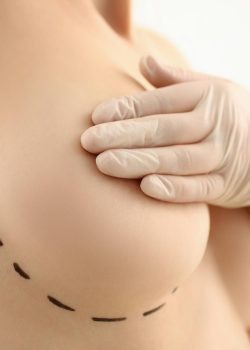









The process necessarily begins with a thorough consultation with the surgeon. During this appointment, the patient discusses her expectations, state of health, and medical/surgical history. The professional conducts a detailed clinical examination to assess breast morphology, skin quality, and discuss the possibilities for implant size, shape, and position.
Photographs and sometimes a scan or ultrasound may be performed to help select the implants. The surgeon explains the follow-up, precautions, risks, as well as the anesthesia process. This step is crucial to choose the technique suited to each body and each project.
The operation is performed under general anesthesia, usually in a clinic or hospital setting. Three possible incision sites are: the inframammary fold (under the breast), periareolar (around the areola), or the armpit. The choice depends on morphology, implant type, and surgeon recommendations.
The surgeon then creates a pocket for the implant: either behind the mammary gland (pre-pectoral) or underneath the pectoral muscle (retro-pectoral). The prostheses are inserted precisely to ensure symmetry and the desired outcome. Closure is done with absorbable or non-absorbable sutures, followed by dressings.
The procedure lasts on average between 1 and 2 hours, depending on complexity, type of implant, and surgical approach. After the operation, close monitoring in the recovery room lasts several hours, after which the patient may return home the same day or the following day in the case of a short hospital stay.
Moderate to intense pain may occur, especially when a submuscular placement is chosen. Analgesic treatment is routinely prescribed to improve comfort in the first few days. Swelling, bruising, and a feeling of tightness are common but subside gradually.
Wearing a compression bra is recommended after surgery, usually for 4 to 6 weeks.
Resuming daily activities can be done after a few days, depending on their intensity. A leave of absence from work for 5 to 10 days is usually recommended, depending on the profession. Physical activities involving the upper body should be avoided for at least one month.
Strict postoperative follow-up is scheduled to monitor healing, implant tolerance, and prevent complications. Scars, initially slightly visible, gradually fade over a few months.
In most cases, breast implant placement requires only one surgical intervention. However, follow-up appointments are essential: an immediate check, at 1, 3, 6, and 12 months. Implant replacement may be considered after 10 to 20 years, or earlier in case of complication or aesthetic concern.
After breast implants are placed, the final result is only fully visible after several weeks to months, once swelling subsides and tissues relax. Patients then observe a fuller, shapelier, and more harmonious bust—often in line with their initial expectations.
In terms of longevity, current implants benefit from significant technological advances that improve their durability. Most manufacturers indicate an average lifespan of 10 to 20 years, although some implants remain in place for longer without needing replacement. Nonetheless, regular professional follow-up is essential to detect any changes or long-term complications. Implant replacement may be considered in the case of rupture, displacement, or dissatisfaction due to the natural aging of the breast tissue.
Like any surgical procedure, breast implant placement involves specific risks that must be known. Immediate complications include infection, hematoma, or delayed healing. In the long term, the main risk is capsular contracture (periprosthetic fibrosis), making the breast hard and sometimes painful. Even though rupture is rare with current models, it remains possible, warranting regular clinical and radiological monitoring.
Changes in nipple sensitivity, the appearance of folds or rippling (especially in very slim patients), implant displacement or rotation, and, in rare cases, the development of breast implant-associated anaplastic large cell lymphoma (BIA-ALCL) are some of the reported complications. In the presence of persistent fever, redness, or abnormal pain, it is advisable to promptly consult a healthcare professional.
Postoperative follow-up is therefore fundamental to ensure stable results and preserve patient health. An annual clinical examination, and in some cases imaging (ultrasound or MRI), allow early detection of any anomalies.