Eyebrow transplant is a cosmetic surgery procedure aimed at restoring or densifying the eyebrows by implanting hair follicles, usually harvested from the scalp. This technique is performed by a specialist surgeon, who redistributes the grafts with precision for a natural result.
Eyebrow transplantation is intended for anyone experiencing partial or total hair loss in the eyebrow area, whether its origin is genetic, traumatic, or related to certain medical treatments.
The prices of an eyebrow transplant vary greatly depending on the country where it is performed and the technique used (FUE, FUT, DHI, etc.). The fee is also influenced by the surgeon’s reputation, the complexity of the case, and the number of grafts required.
| Country | Average FUE Price | Average DHI Price | Average FUT Price |
|---|---|---|---|
| France | €3500 | €4000 | €3200 |
| United Kingdom | €3900 | €4200 | €3500 |
| Germany | €3600 | €4100 | €3300 |
| Netherlands | €3700 | €4100 | €3400 |
| Italy | €3100 | €3500 | €2800 |
| Tunisia | €1800 | €2100 | €1700 |
| Turkey | €2200 | €2500 | €2000 |
| Hungary | €2400 | €2600 | €2100 |
| Czech Republic | €2450 | €2650 | €2100 |
| Lithuania | €2300 | €2500 | €2000 |
| Thailand | €2000 | €2300 | €1800 |
| Poland | €2300 | €2500 | €2000 |
| Belgium | €3200 | €3500 | €2900 |
| Brazil | €2100 | €2400 | €1800 |
| Albania | €1600 | €1800 | €1500 |
Average prices observed and updated in 2025.
Eyebrow transplants are generally not covered by national health insurance or social security, as this is considered a cosmetic procedure. Only rare situations, such as reconstruction after an accident or proven illness, may qualify for partial reimbursement, which often requires prior approval.
The goals of eyebrow transplantation are multiple: restoring dense eyebrows, correcting irregularities, or filling in sparse areas. This surgery is suitable for both complete reconstruction and minor aesthetic touch-ups.
Eyebrow transplants have benefited in recent years from numerous innovations, both technical and material:


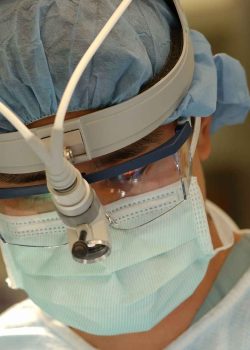


The eyebrow transplant is performed under local anesthesia on an outpatient basis. The procedure begins with the harvesting of hair follicles, most often from the back of the scalp, in an area where the hair most closely resembles that of the brow, both in fineness and curvature.
These follicles are then carefully sorted and prepared. The surgeon draws the contour of the eyebrows according to the patient’s morphology and wishes, then makes tiny incisions in the area to be treated. The grafts are then implanted one by one, respecting the natural orientation of the hairs to guarantee a harmonious and natural result.
A light dressing is sometimes applied to protect the transplanted area in the hours following the procedure.
The average duration of an eyebrow transplant generally ranges from 2 to 4 hours. It mainly depends on the number of grafts to be implanted and the technique used (FUE, DHI, or FUT).
In complex cases involving complete reconstruction, the procedure may sometimes last slightly longer. Nevertheless, most patients leave on the same day.
The operation is almost always minimally or not at all painful thanks to local anesthesia. The most common sensation remains that of the anesthetic injection, which is usually brief and well tolerated.
After the procedure, some tightness, local sensitivity, or slight tingling may be felt around the brows and in the donor area. These discomforts are mild and can be relieved with a prescription for mild painkillers. Rarely, minor swelling may appear in the following days, which resolves spontaneously without sequelae.
Postoperative follow-up after an eyebrow transplant is essential to ensure the success of the aesthetic result as well as the integrity of the implanted area. Understanding the evolution of the results, their long-term stability, and the management of postoperative care allows you to approach this procedure with full knowledge.
The first changes are visible as soon as the procedure is completed, particularly the immediate densification of the eyebrow line thanks to the presence of the grafts. However, these newly implanted hairs tend to fall out after 2 to 4 weeks—a completely normal phenomenon known as « shock loss. »
True regrowth generally begins around the third month, with a natural appearance developing gradually. The final result can be appreciated between 6 and 12 months after the procedure, allowing time for the grafted hairs to adopt their final growth cycle in terms of density, length, and orientation.
A properly performed eyebrow transplant offers lasting results. The transplanted hairs retain the biological memory of their origin area (the scalp), ensuring continuous growth over the years.
However, it is possible that the growth length may be greater than that of a natural eyebrow, requiring regular maintenance (trimming and brushing). In the absence of illness or local trauma, the aesthetic effect remains stable for many years, or even for life.
In the week following the eyebrow transplant, slight swelling or redness may persist in the implanted area. Small scabs typically form around the grafts, falling off spontaneously within 10 days.
Pain is usually moderate and well controlled with simple painkillers. Scarring in the brow area is almost invisible thanks to the finesse of the instruments used. At the donor site, a small linear scar may remain in the case of FUT; otherwise, there is generally no trace with FUE or DHI techniques.
Despite a high satisfaction rate, eyebrow transplantation, like any surgery, involves risks: partial rejection of grafts, infection, incomplete regrowth, or abnormal hair orientation. A few cases of visible scarring, overcorrection, or abnormal regrowth have also been reported.
To avoid such complications, it is crucial to choose an experienced surgeon, strictly follow postoperative instructions (careful hygiene, limited sun exposure, no rubbing) and actively attend follow-up consultations. In case of doubt or abnormal signs (persistent redness, intense pain, oozing), consult your practitioner immediately for early treatment.